Champagne shipments declined for a third year in 2025, according to annual data published by Comité Champagne.
The number of shipped bottles fell to 266 million from 271.4 million, the trade group representing Champagne growers and producers said in a Jan. 17 report.
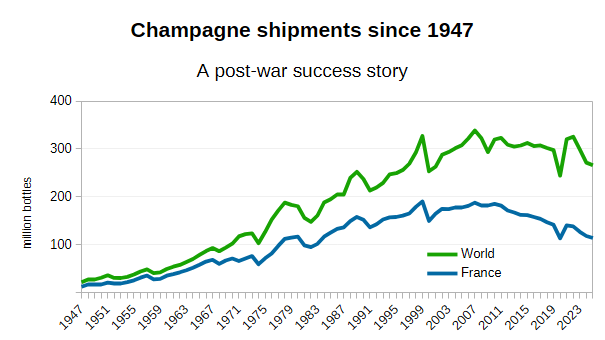
Shipped volumes were the lowest since 2020, when the Covid-19 pandemic caused a slump in trade and consumption, and down from a post-Covid peak of 325.5 million bottles in 2022, according to data from the Comité Interprofessionnel du Vin de Champagne.
Champagne demand has been under pressure due to changing drinking habits and competition from cheaper sparkling wines such as Prosecco, as well as the broader impact of inflation, economic uncertainty and tariffs.
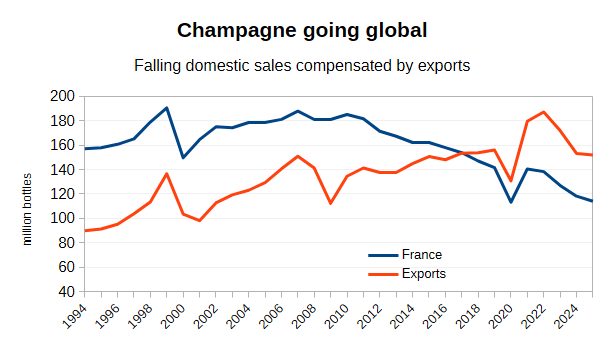
In France, the biggest single market for Champagne, shipments fell for a fourth year to around 114 million bottles, vying with 2020 for the lowest volume since the early 1980s. Comité Champagne says the country remains an “absolute priority for the industry,” and the trade group’s co-President Maxime Toubart said the French market must be strengthened.
To put the recent slowdown in context, Champagne has been a massive post-World War 2 success story for the French wine industry. In 1960, Champagne shipped around 49 million bottles, of which more than two thirds stayed at home. Shipments had doubled by 1970 to 102 million bottles and had doubled again by 1986, boosted by rising domestic consumption and a growing export share.
The number of exported bottles caught up with domestic Champagne shipments in 2017, and hasn’t dropped below local consumption since.