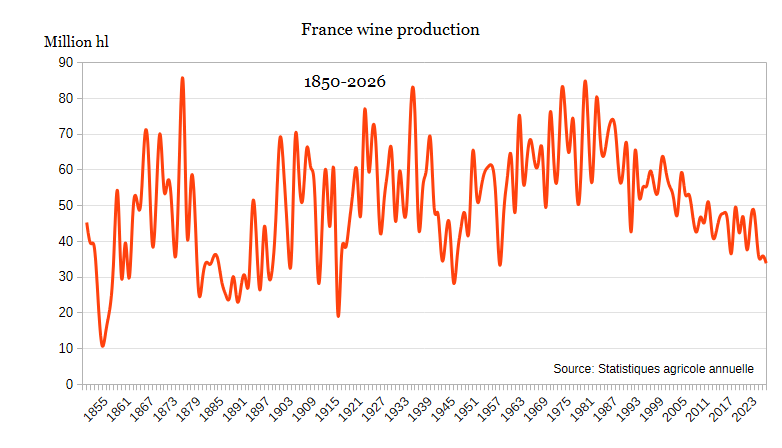
French wine production is estimated to drop 5.7% in 2026 to the lowest level in nearly seven decades, due to the impact of drought and repeated summer heatwaves in combination with a shrinking vineyard area.
The volume of wine from this year’s grape harvest is estimated at 33.86 million hectoliters, falling from 35.89 million hl in 2025, the French Agriculture Ministry’s statistics service Agreste reported on Sept. 7. That’s equivalent to about 4.5 billion standard bottles, and would be France’s smallest wine production since 1957, based on historical data from the ministry.
France’s wine production peaked in 1979 at 84.5 million hl and has been trending downward since, with volumes now starting to approach the lows of the 1880s, in the aftermath of the phylloxera epidemic that devastated French vineyards.
In a year with multiple heat records – the hottest spring and summer on record, the overall hottest month in July and one of the driest on record, three summer heatwaves – French vineyards locally suffered from sunburn, scorching, defoliation and shriveled grapes, according to Agreste.
That quashed the potential of a year that had started favorably, after spring rains replenished soil moisture and with low disease pressure. Exceptionally high spring temperatures meant harvesting in most vineyards began in August, according to the statistics service.
Wine-growing conditions this year have been in stark contrast to those of1957, when spring frosts compounded freezing damage inflicted on the French vineyard a year earlier, followed by a wet and cool summer with repeated rain and relatively little heat.
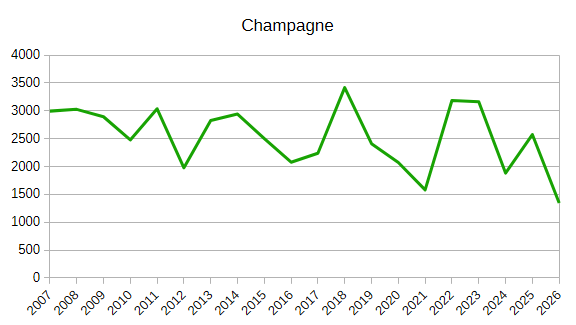
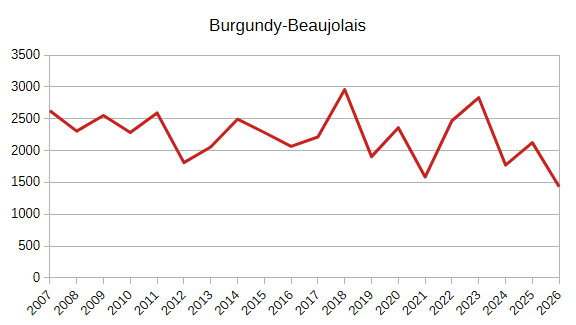
Champagne and Burgundy were particularly impacted by weather conditions this year, with the harvest in Champagne reduced by half from a year earlier, and bunch weight the lowest in 20 years. Burgundy and Beaujolais faced hail, drought and heatwaves that strongly reduced production potential, with losses for Pinot noir grapes in Burgundy exceeding 50%.
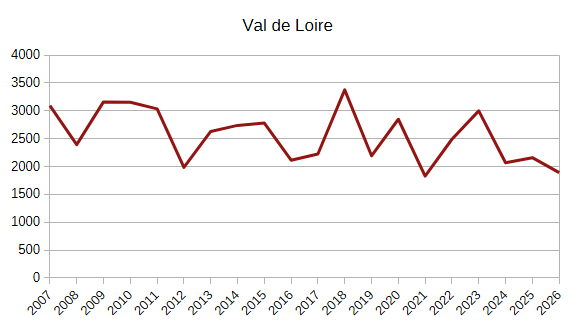
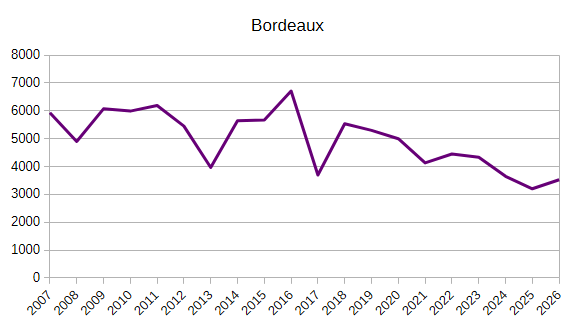
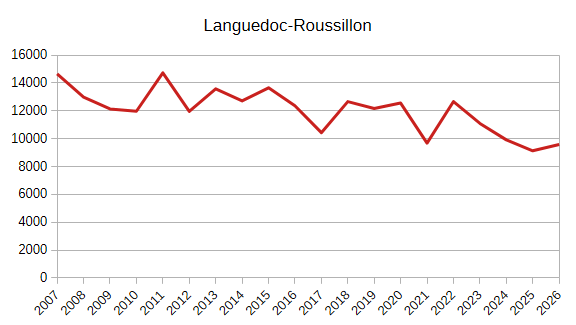
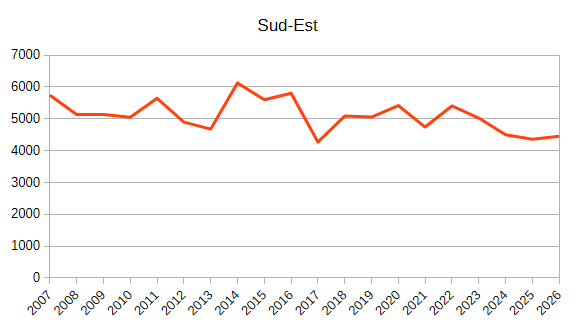
Production 2007-2026 for several regions based on Agreste data (1,000 hl):
Leave a Reply